How to Make Cells in Fluid Art: A 2026 Guide to Masterful Pours
Updated: Aug 21
The most breathtaking cells in fluid art aren't just chemical accidents; they're the quiet evidence of physics finding its own balance on your canvas. You've likely felt that moment of anticipation when you tilt your board, only to watch your vibrant colors turn muddy or your beautiful bubbles vanish before the paint even dries. It's frustrating when a practice meant for peace feels like a struggle against the materials. Learning how to make cells in fluid art is less about force and more about understanding the delicate dance between density and surrender.
In this 2026 guide, we'll explore the serene science of cell creation to help you transform your acrylic pours into mesmerizing, cellular masterpieces. You'll discover the exact techniques to achieve distinct, vibrant cells while finally understanding the 'why' behind the process. We'll look at the role of additives like silicone oil and Floetrol, ensuring you can find a peaceful creative rhythm that translates your internal state into external form. By the end, you'll have the clarity and confidence to treat every pour as a supportive journey of self-discovery within a protected environment of your own making.
Table of Contents
Understanding the Magic: What are Cells in Fluid Art?
Cells are the heartbeat of a fluid painting. They are the organic, circular patterns that emerge when different layers of paint interact, pushing and pulling against one another in a silent struggle for space. While fluid art has evolved into a beloved modern abstract medium, its true power lies in the way it mirrors the complexities of our internal world. When you watch these shapes bloom on the canvas, you aren't just witnessing a chemical reaction; you're entering a flow state where time slows down and the mind finds a rare moment of stillness. Learning how to make cells in fluid art is often the first step toward finding this internal quiet.
This process is deeply grounded in the Rayleigh-Taylor instability, a scientific principle where fluids of different densities interact. In the context of your art, it's a fluid dance. Understanding the science allows you to transition from a passive observer to a compassionate guide of your own materials. It's an invitation to move beyond the technical and embrace a mindful creative journey, where the act of making becomes inseparable from the act of healing.
The Aesthetic Appeal of Cellular Patterns
These patterns resonate with us because they mimic the very structures of life. You might see the intricate webbing of biological cells under a microscope, or the sprawling beauty of an aerial landscape from thousands of feet above. Because these forms create layers of depth and movement, a static piece of art begins to breathe. There is a profound lesson in the unpredictability of these shapes. By allowing the cells to form as they wish, you practice the courage required to let go of perfection and embrace the beauty of the unknown. This surrender is where true creativity begins.
Seeing how professional artists utilize these cellular patterns can often spark new ideas for your own work; for instance, you might discover Art-eyedeas to see how modern abstract art can transform a space with its vibrant energy.
Why Your First Pours Might Be Flat
It's common to feel a sense of disappointment when your first attempts result in a flat, muddy surface. Often, this happens because the paint-to-medium ratios are slightly out of balance. If your consistency is too thin, the colors blend too aggressively, losing their individual identity. Mastering how to make cells in fluid art requires a focus on layering. Without proper layering and distinct densities, the pigments cannot rise or sink effectively. This lack of movement is what causes muddying, but it's simply a sign that your materials need a more supportive structure to thrive. By adjusting your approach, you provide the space for each color to exist in its own vibrant clarity.
The Science of the Pour: Density, Tension, and Additives
To truly master how to make cells in fluid art, we must look beneath the surface at the quiet physics of the pour. It's helpful to view your paints not as static colors, but as living fluids with their own unique weights and boundaries. When you layer these fluids, they begin a rhythmic exchange. This movement is a predictable interaction of density and surface tension. Scientific research into hydrodynamic instabilities in art shows that when a heavier layer rests above a lighter one, the layers naturally seek to switch places. In this fluid dance, the heavier paint sinks while the lighter paint pushes upward, creating the organic, bubbling structures we recognize as cells.
A professional pouring medium is essential in this process. It acts as a supportive bridge, maintaining the integrity of the pigments so they don't simply dissolve into one another. Without this structure, the delicate balance of tension is lost, and your vibrant vision can quickly become a muddy blur. If you find the technical side of mixing daunting, joining a Fluid Art Workshop can provide a protected environment where you can explore these materials with gentle, expert guidance.
Silicone Oil vs. Isopropyl Alcohol
Additives act as gentle catalysts for cell formation, but they achieve their results in very different ways. Silicone oil works through a principle of repulsion. Because oil and water-based acrylics don't mix, the silicone drops push the paint away from them as they rise, creating large, rounded "crater" cells with defined edges. Isopropyl alcohol takes a different path. It creates cells through rapid evaporation and the disruption of surface tension. This results in delicate, lacy patterns that feel like fine gossamer or sea foam. While silicone offers bold, structural boundaries, alcohol provides a softer, more ethereal texture to your work.
The Role of Pigment Weight
Every color carries its own weight, which profoundly impacts how to make cells in fluid art. Earth tones like Raw Umber or Yellow Ochre are typically heavier because they contain natural minerals. Titanium White is famously dense, making it an excellent "anchor" when placed at the bottom of a cup or a powerful "sinking" layer when poured on top. Conversely, many blues and violets are chemically lighter. When you place a heavy white over a light blue, the white will sink through the blue, dragging color with it and birthing new, complex forms. Understanding these weights allows you to layer with intention rather than chance.
Heavy Pigments: Titanium White, Silver, and most earth tones.
Mid-Weight Pigments: Cadmium reds and oranges.
Light Pigments: Phthalo Blue, Phthalo Green, and most violets.
The Golden Ratio is your guide here. To truly understand how to make cells in fluid art, aim for a mixture of approximately two parts pouring medium to one part acrylic paint. Add water sparingly, drop by drop, until you reach a consistency that mirrors warm honey. This specific viscosity ensures that the colors have enough body to hold their shape, yet enough fluidity to engage in the dance of density. Once your base is ready, it's time to invite the cells to form through the intentional use of additives and technique.
Mixing for Success
Consistency is everything. If the paint is too thick, the cells remain trapped; if it's too thin, they dissolve into a muddy blur. Once you achieve that 'warm honey' flow, add two to three drops of silicone oil to only two or three of your 'rising' colors. It's vital to stir the silicone gently. Over-mixing will break the oil into tiny particles, resulting in small, sand-like cells that lack visual depth. By keeping your movements deliberate, you preserve the potential for expansive, breathtaking patterns.
The Pour and the Torch
Your choice of technique dictates the final landscape. The 'Flip Cup' method creates concentrated cellular clusters, while a 'Dirty Pour' encourages a more sprawling, natural flow. The final reveal belongs to the heat. Torching is the gentle application of heat to reduce surface tension. Using a butane torch safely pops air bubbles and coaxes buried cells to the surface, allowing your internal state to take external form.

Troubleshooting: When Cells Don't Appear
It's natural to feel a wave of disappointment when the cells you've carefully prepared for seem to vanish or blend into a grey haze. This moment isn't a failure; it's a quiet invitation to observe the nuances of your materials. Often, 'disappearing cells' are the result of over-tilting. While it's tempting to stretch the paint to every corner, excessive movement can pull the cellular structures until they collapse. Learning how to make cells in fluid art involves knowing when to stop, allowing the paint to rest in its natural form. By honoring the paint's limits, you protect the delicate boundaries of each cell.
Muddying usually happens when the paints are too thin or if they've been mixed too aggressively. When pigments lose their individual boundaries, they merge into a single, indistinct tone. Environmental factors like high humidity or extreme room temperatures can also interfere, slowing down the drying process and allowing colors to bleed into one another. In these moments, try to embrace a mindset of practice over perfection. Every 'muddy' canvas is a stepping stone toward a deeper understanding of your creative voice and the steady presence required to guide it.
Saving a 'Muddy' Piece
If your piece feels flat, you can introduce new life using a 'swipe' technique. By gently pulling a palette knife or a damp paper towel across the surface, you can encourage fresh cells to rise from the layers beneath. As a last-resort rescue, a light spritzing of isopropyl alcohol can break the surface tension and create delicate, lacy patterns. Most importantly, recognize the moment to stop tilting. Preserving the organic shapes requires a steady hand and the courage to leave the canvas exactly as it is.
Maintaining Colour Clarity
The vibrancy of your cells depends heavily on the quality of your pigments. High-quality acrylics maintain their brilliance even when diluted, whereas lower-grade paints can turn grey or dull when interacting. Be cautious with water; using more than a few drops can cause the pigment to break down entirely. To ensure your colors 'pop', layer them with intention. Placing a very dark color next to a very light one provides the contrast needed for the cellular boundaries to remain sharp and clear.
If you find yourself struggling with these technical hurdles, you don't have to face them alone. Joining a Fluid Art Workshop offers a supportive environment where you can refine your technique under compassionate guidance.
Master the Flow: Fluid Art Workshops in Dubai
While understanding the physics of density and the golden ratio of mixing is a beautiful first step, there is a profound shift that occurs when you move from the solitary space of your home to an immersive studio environment. The transition from solitary DIY theory to the tactile reality of a studio allows your mind to truly rest. When you step into a dedicated creative space, you leave behind the distractions of daily life and the anxiety of potential mess. Mastering how to make cells in fluid art often feels like a series of experiments, but within the walls of a professional studio, those experiments become a guided journey of discovery.
Expert guidance acts as a steady presence, offering the reassurance you need to experiment with bold color combinations and new pouring techniques. You don't have to navigate the overwhelming variety of additives or the frustration of muddy colors alone. Instead, you can lean into the expertise of a compassionate guide who helps you bypass the messy trial and error phase. By joining a workshop, you learn the nuances of how to make cells in fluid art through hands-on practice, ensuring your vibrant visions don't disappear as they dry. This collaborative approach turns the act of painting into a supportive conversation between your inner self and the materials.
The Art Therapy Studio Experience
The atmosphere at Art Therapy Dubai is intentionally crafted to foster a sense of peace and possibility. We understand that the creative process can sometimes feel vulnerable; therefore, we treat our studio as a protected environment where every pour is an opportunity for growth. All professional-grade materials are provided, ensuring you work with the high-density pigments and quality oils necessary for masterful results. This removes the heavy burden of setup and cleanup, allowing you to focus entirely on the internal state you wish to translate onto the canvas. You can explore our full range of offerings in our Art Workshops in Dubai guide to find the perfect creative sanctuary for your needs.
Beyond the Canvas: Wellness and Connection
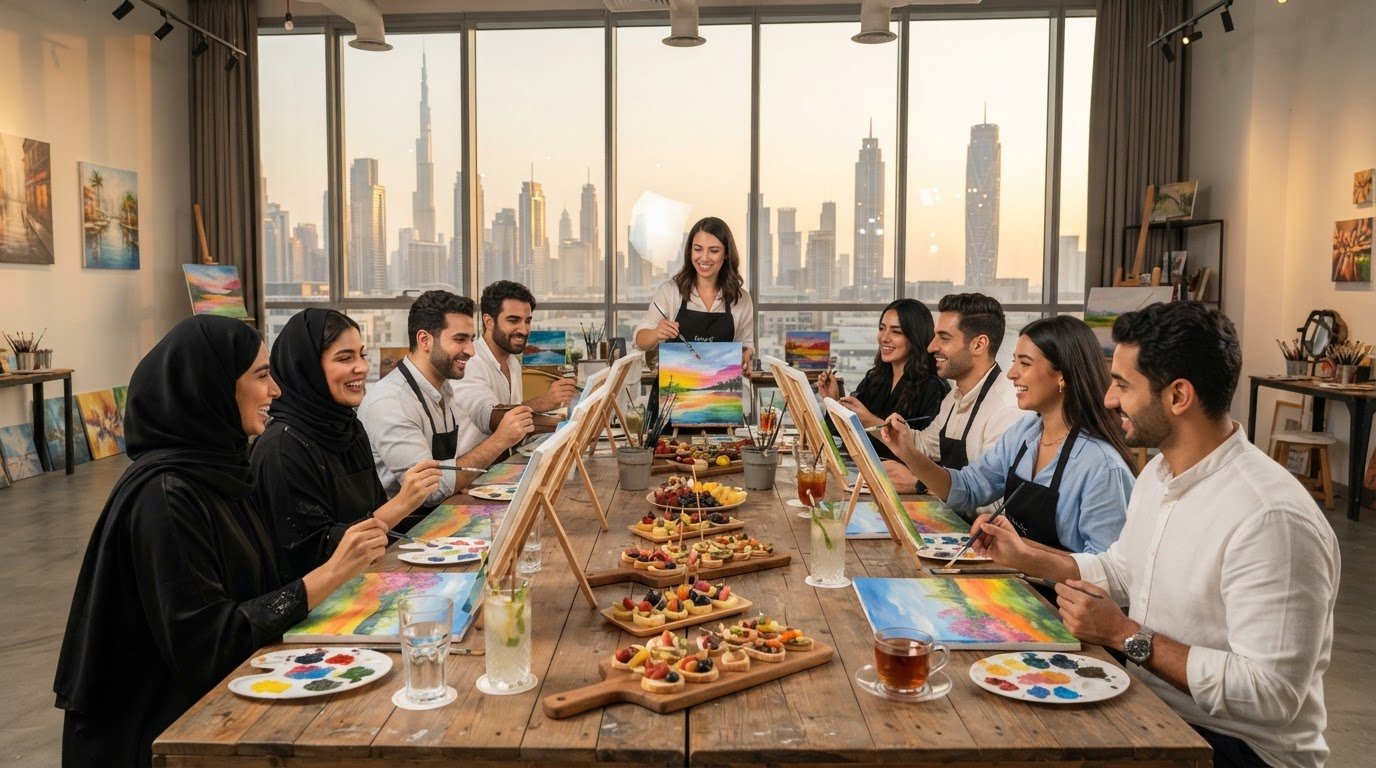
Fluid art is a powerful, accessible tool for communication when verbal language feels insufficient. Our workshops provide a space for quiet reflection or shared laughter among a community of creators on Sheikh Zayed Road. Every session is more than a technical lesson; it's a collaborative journey of self-discovery. If you are seeking a more intimate setting for a celebration, we offer private options for Art Parties in Dubai. These gatherings transform a simple birthday or corporate event into a shared experience of healing and artistic expression. We invite you to book a session in 2026 and rediscover the stillness within your own creative flow.
Embrace Your Creative Flow
Mastering the delicate dance of pigments is more than a technical achievement; it's a path toward finding stillness in a busy world. By understanding the rhythmic interplay of density and the gentle nudge of additives, you've unlocked the secrets of how to make cells in fluid art that truly resonate. Remember that every pour is a collaborative journey between your inner self and the canvas, where muddy colors or disappearing cells are simply signs that your materials need a more supportive structure to thrive.
You don't have to navigate this path alone. Our studio on Sheikh Zayed Road offers a protected environment designed for your psychological safety and creative growth. With professional instructors to guide your hand and all premium materials included, you can bypass the frustration of trial and error. Book your Fluid Art Workshop at our Dubai studio today and transform your internal states into mesmerizing, cellular masterpieces. Trust in the process, honor your individual agency, and let the colors find their own beautiful balance.
Frequently Asked Questions
Can I make cells without silicone oil?
You can achieve beautiful cells through the natural interaction of paint densities without any oil at all. By layering a heavy pigment like Titanium White over lighter colors, the heavier paint sinks while the lighter ones rise, creating organic structures. This rhythmic movement allows you to practice how to make cells in fluid art using only the inherent physics of your materials. It's a peaceful way to embrace the fluid dance of the paints.
What is the best pouring medium for beginners in Dubai?
Floetrol is widely considered the most reliable and accessible pouring medium for those beginning their journey in the UAE. It offers a smooth, consistent flow that helps maintain the integrity of your pigments while preventing the paint from drying too quickly in our warm climate. Using a professional medium creates a protected environment for your colors, ensuring they stay vibrant and distinct throughout the creative process.
Why do my cells turn into 'mud' when I tilt the canvas?
Muddying usually happens when you over-tilt the canvas or if the paint consistency is too thin for the layers to hold their shape. When you stretch the paint too far, the delicate boundaries of the cells collapse and the colors bleed into one another. To preserve the clarity of your piece, try to move the paint with a steady, deliberate hand and stop once you've reached the edges of your sanctuary.
Is fluid art messy to do at home?
Fluid art is inherently a tactile and sprawling process that requires significant preparation to manage safely within a home environment. While the act of pouring is deeply therapeutic, the setup and cleanup can often disrupt the sense of peace you're trying to cultivate. Many creators find that joining a professional studio allows them to focus entirely on the journey of self-discovery without the stress of managing materials in a domestic space.
How long does a fluid art piece take to dry in the UAE climate?
Most acrylic pours require 24 to 48 hours to be dry to the touch, though they may take up to a week to fully cure in the UAE's humidity. It's helpful to let your piece rest in a cool, level area away from direct sunlight to prevent the surface from cracking. This period of stillness is a beautiful metaphor for the patience required in any healing process, allowing the work to settle into its final form.
Do I need a torch to create cells in my acrylic pour?
While a torch isn't strictly necessary, it's a powerful tool for coaxing buried cells to the surface of your canvas. The gentle application of heat reduces surface tension and pops air bubbles, acting as a catalyst for the cellular structures hidden beneath the top layer. If you're learning how to make cells in fluid art, a torch provides a level of control and clarity that is difficult to achieve through tilting alone.
Can I use hair oil or dish soap as a cell activator?
You can experiment with household items, but they often lack the chemical stability and archival quality of professional additives like silicone oil. Hair oils may contain fragrances or minerals that prevent the paint from drying correctly, and dish soap can break down the pigment's binder over time. For a more supportive and lasting creative experience, it's best to use materials specifically designed to protect the integrity of your artistic expression.
How do I get 'lacing' effects instead of round cells?
Lacing is achieved by using a 'swipe' technique with a lighter, more fluid cell activator or a touch of isopropyl alcohol. Instead of the deep, crater-like shapes created by silicone oil, the swipe pulls a thin veil of color over the surface to create a delicate, webbed effect. This technique mirrors the intricate patterns found in nature, such as sea foam or lace, providing a softer aesthetic for your internal exploration and reflection.

Comments