
Caring for Resin Art Coasters Through Heat and Cleaning
Heat can mark a resin coaster, while a dishwasher exposes it to high temperatures and harsh detergent. For caring for your resin art coasters, skip the dishwasher: hand-wash them with warm, soapy water and dry them with a soft cloth. Softer epoxy may be damaged by hot drinks, so use care with hot mugs and keep coasters away from very hot dishes and direct sunlight.
It’s natural to wonder whether a coaster made to sit beneath a drink can withstand heat and everyday spills. The answer depends partly on the resin, but gentle hand-washing is safer than machine cleaning, soaking or scrubbing. This guide explains how to clean cast resin and resin-coated wooden coasters, what to avoid, and how sunlight and heat can affect their surface, so you can care for each piece confidently.
Table of Contents
1. Is Resin Art Dishwasher Safe?
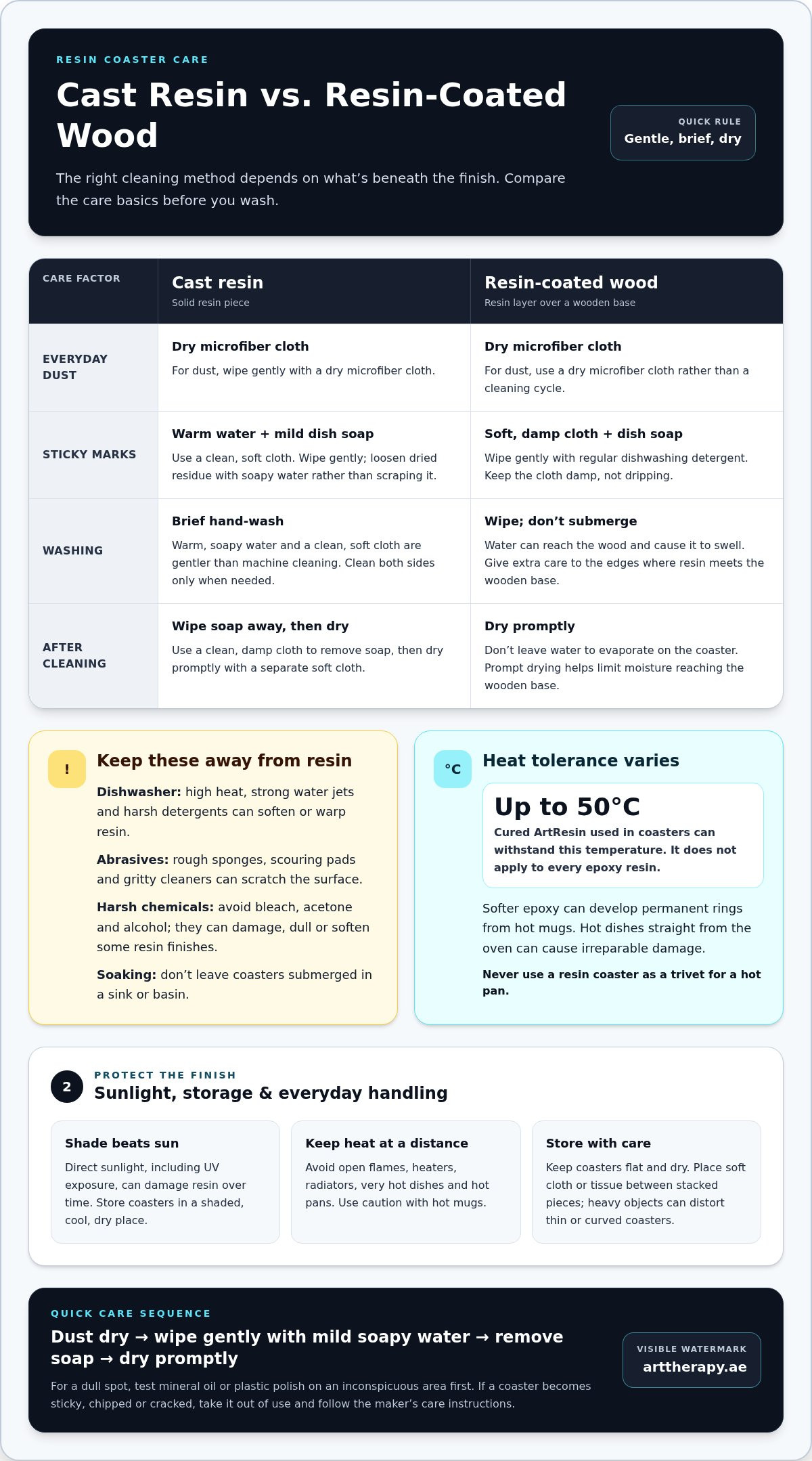
No. Keep resin coasters out of the dishwasher unless their maker specifically says they’re dishwasher-safe. High heat, strong water jets and harsh detergents can soften or warp resin. Hand-washing with warm, soapy water is gentler. For everyday dust, use a dry microfiber cloth instead of a cleaning cycle.
Protect the smooth surface from scratches by choosing soft cleaning materials. Abrasive scouring pads, rough sponges and gritty cleaners can leave marks that won’t wipe away. Use a microfiber or soft cotton cloth instead. Don’t scrape dried residue with a knife or other sharp object; loosen it with soapy water, then wipe gently.
Avoid bleach, acetone and alcohol. Bleach and acetone can harm resin, while alcohol may dull the finish or leave some resin sticky and soft. Mild dish soap diluted in warm water is a gentler option. Apply it with a soft cloth, wipe away the soap with a clean, damp cloth, and dry the coaster promptly.
Are resin coasters food-safe once fully cured? A fully cured resin surface isn’t automatically suitable for direct food contact. Use a coaster beneath a cup or glass, not as a plate or serving board; suitability depends on the resin and its maker’s instructions.
Dropping a coaster can cause chips or cracks, so handle it over a stable surface and keep it away from counter edges. If it chips or cracks, stop using it beneath drinks and set it aside to prevent further damage. If it becomes sticky, don’t scrub it with alcohol or cover the tacky area. Take it out of use and follow the maker’s care or repair instructions.
For caring for your resin art coasters, match the cleaning method to the piece. Cast resin can be washed gently, while resin-coated wood needs a lighter touch. Don’t submerge wooden coasters, as water may swell the base. These small choices limit exposure to heat, harsh chemicals and scratches, helping preserve the finish through regular use.
2. Protecting resin coasters from sunlight and heat
Direct sunlight, including UV exposure, can damage resin over time. In Dubai, display or store coasters in a shaded place rather than on a sunny windowsill. Moving them away from a bright window limits direct sunlight on the finish. A cool, dry cupboard also protects them between uses.
Heat needs similar care. Cured ArtResin used in coasters can withstand temperatures up to 50°C, but that figure doesn’t apply to every epoxy resin. Hot mugs can leave permanent rings in softer epoxy, and hot dishes straight from the oven can cause irreparable damage. Keep coasters away from open flames, heaters and radiators. Never use one as a trivet for a hot pan.
Can you place hot mugs, pans or candles on resin coasters? The effect of a hot mug depends on the resin: softer epoxy can mark, so use caution. Don’t place hot pans or burning candles on resin; intense heat and open flames can damage the surface.
Store coasters flat and dry, away from direct sunlight and extreme temperatures. To prevent scratches, place a soft cloth or tissue between stacked pieces. Don’t press heavy objects onto thin or curved coasters, as pressure can distort them. A resin coaster that remains bendy after demolding needs more curing time.
How long should resin coasters cure before use, and how can you tell they are fully cured? Follow the resin maker’s full-cure instructions; a bendy coaster needs more time. The 72-hour guidance for resin art applies to curing after pouring before packing for shipping, not a universal ready-to-use time.
Do resin coasters need a protective finish, and how often should it be reapplied? A separate finish isn’t automatically needed, and there’s no single reapplication schedule for every resin. One suggested option for hot-drink use is 3-4 coats of very high-temperature clear automotive spray, but finishes aren’t universal. Follow the coating maker’s instructions, and test polish on a small area before treating a dull spot.
For a hands-on way to explore resin as an art material, consider creative resin practice.
3. Cleaning resin art with a soft, damp cloth and mild soap
For everyday dust, wipe resin items with a dry microfiber cloth. For sticky marks or drink residue, dampen a soft cloth with warm water and mild dish soap. Wipe gently, remove the soap with a clean, damp cloth, then dry the coaster with a separate soft cloth instead of leaving water to evaporate.
Keep the cloth damp, not dripping. Excess water can seep into seams or beneath a resin coating. For cast resin coasters, use warm, soapy water and a clean, soft cloth. Work over a sink or stable counter, and clean both sides only when needed. A gentle touch helps preserve the glossy surface.
Resin-coated wooden coasters need a lighter touch than solid cast resin. Wipe them with a soft, damp cloth and regular dishwashing detergent, then dry them promptly. Don’t submerge them: water can reach the wood and cause it to swell. Pay close attention to the edges, where the resin layer meets the wooden base.
How do you remove stains, fingerprints and cloudy marks from resin coasters? For fingerprints and fresh stains, wipe gently with a warm, damp, soapy cloth, then dry. If a small dull spot remains, test a tiny amount of mineral oil or plastic polish on an inconspicuous area first.
Cloudiness can have several causes, so start with mild soap rather than stronger cleaning products. Rinse the cloth and wipe away residue; soap left behind can make the surface look hazy. Don’t use alcohol, bleach, acetone or abrasive pads to remove a stubborn mark. They can dull or damage resin instead of clearing it.
For caring for your resin art coasters, treat each mark as a reason to clean gently, not scrub harder. If mild soap doesn’t lift a stain, stop before applying a new product to the whole piece. A small test area helps show whether polish changes the finish, especially on coloured or patterned resin.
4. Hand-washing resin coasters
Hand-washing lets you control the water, pressure and cleaning time. Begin by reading the maker’s care instructions, especially for resin-coated wood. Use warm water, mild dish soap and a clean, soft cloth, and keep washing brief. Epoxy resin resists water but isn’t waterproof, so don’t leave coasters submerged in a sink or basin.
For cast resin, wet the coaster and gently wipe the top, underside and edges. A soft cloth lifts drink residue without rough scrubbing. Rinse away the soap with clean water, then dry the piece with another soft cloth. Check the base before setting it down, as a lingering wet patch can transfer onto a table or shelf.
Wood-backed coasters need less water. Put a little soapy water on a damp cloth rather than soaking the coaster. Wipe the resin surface and edges carefully, keeping moisture away from exposed wood where possible, then dry promptly. Water can seep beneath the coating or reach the wooden base, where it may cause swelling.
Use separate cloths for washing and drying; grit caught in a used cloth can scratch the surface. If a sticky drink mark remains, soften it with a damp cloth before wiping again. Don’t scrape residue with a blade, use a coaster as a cutting surface, or apply strong chemicals while hand-washing. These choices can mark or dull the resin.
Dry coasters fully before stacking or storing them. If you notice a cloudy film, first rinse away soap residue and buff gently with a clean, dry cloth. Hand-washing can’t reverse yellowing; sunlight can affect resin, so store pieces away from direct sun. A careful wash protects the finish without turning routine cleaning into a scrub.
Want to explore how resin behaves as you create? Try a hands-on resin art experience and learn through the process.
Art Therapy: Resin Art Workshop
If this care guide has sparked your curiosity about working with resin, Art Therapy’s Resin Art Workshop is a natural next step. Creating a piece by hand gives you room to explore how resin flows, settles and takes shape, and to get to know the material through a guided workshop for people without drawing experience.
Choose a workshop when you’d like to move from caring for finished coasters to experiencing the creative process yourself. If you’re drawn to a different medium, Art Therapy also offers acrylic painting, oil painting and 3D texture art workshops. Each offers another way to explore colour, form and texture at your own pace.
If you’d like to learn more about the Resin Art Workshop, contact Art Therapy or visit arttherapy.ae.
Let Your Next Creative Moment Begin
A coaster can be more than a place to rest a cup. It can be a small reminder of the colours, textures and choices that brought it to life. As you continue caring for your resin art coasters, let everyday use guide what you’d like to create or explore next.
If you’re curious about working with resin or want to find a new way into painting, Art Therapy offers Resin Art, Acrylic Painting and Oil Painting Workshops in Dubai. Designed for people without drawing experience, each workshop gives you room to learn by making, follow your own ideas and enjoy the process without needing a perfect result to begin.
Reach out to Art Therapy to explore a creative workshop that feels right for you. Contact Art Therapy about its workshops and take your next step at your own pace.
Frequently Asked Questions
Heat Safety: How Hot Is Too Hot?
Very hot dishes, open flames and sustained heat can damage resin coasters. Cured ArtResin used in coasters can withstand temperatures up to 50°C, but that limit doesn’t apply to every resin. A hot mug may leave a lasting ring on softer epoxy. Use a trivet for cookware and keep resin pieces away from candles while lit.
Is Resin Art Dishwasher Safe?
No, resin art generally shouldn’t go in a dishwasher. A machine combines heat, forceful water and strong detergents, which can affect the resin’s finish or shape. If a coaster combines materials, such as resin over wood, the wash cycle can also expose its base to moisture. Hand-washing gives you better control over cleaning pressure and water exposure.
How do you clean resin art coasters without scratching or damaging them?
Use a clean, soft cloth and mild dish soap, wiping gently instead of scrubbing. Before cleaning, check the cloth for grit or crumbs that could scratch the finish. For a dried drop of juice, hold a damp cloth against the spot briefly to loosen it. Avoid sharp tools, scouring pads and harsh cleaners that can mark resin.
Can resin coasters go in the dishwasher or be soaked in water?
Keep resin coasters out of the dishwasher, and don’t leave them soaking. Epoxy resin resists water but isn’t waterproof, so prolonged immersion can cause problems, especially around seams or exposed edges. Resin-coated wooden coasters need particular care because water may swell the wood beneath the coating. Clean them with a damp cloth and dry them after wiping.
What temperature can resin coasters safely withstand?
There isn’t one temperature limit for every resin coaster. Cured ArtResin used in coasters can withstand temperatures up to 50°C, while softer epoxy may be marked by a hot mug. Treat the resin type and its maker’s care instructions as the deciding factors. Avoid placing oven-hot dishes on coasters, even if they’re made from a harder resin.
How do you protect resin coasters from sunlight and UV exposure?
Keep resin coasters away from direct sunlight, such as on a sunny windowsill or beside a bright window. UV exposure can damage the resin surface over time. Store pieces in a dry, shaded place when they’re not in use, and avoid leaving them in a parked car, where heat can put further stress on the material.


Comments