
Resin Art Safety Precautions: A Practical Checklist for Beginners
Could the safest resin setup be the one you pause to check before opening the bottles? Resin art safety precautions aren’t a one-size-fits-all checklist. The right choices depend on the product, its instructions, and the space where you’re working.
If you’re unsure which gloves or eye protection to use, worried about fumes in an enclosed room, or uncertain what to do with a spill or leftover resin, you’re not alone. Preparation can make the process clearer. Start with the product label and Safety Data Sheet (SDS), then use them to guide your decisions instead of relying on broad claims such as “low odour” or “non-toxic.”
This practical checklist covers how to prepare your workspace, handle resin and additives with care, and clean up or pause when something doesn’t seem right. You’ll also learn when to seek product-specific or professional guidance instead of guessing. If you’re considering a guided resin art workshop in Dubai, the same approach can help you ask clear questions about the studio’s current safety procedures before booking.
Table of Contents
Resin Art Safety Precautions: Understand the Material Before You Begin
You don’t need to guess your way through working with resin. First, identify the exact product and read its guidance before opening or combining anything. Resin art safety precautions are about reducing exposure and following instructions for the resin and hardener you actually have, not relying on a generic list that may not fit.
Resin systems differ in ingredients, hazards, mixing directions, and storage requirements. Even products that look similar may call for different handling. Background reading on Epoxy resins can explain the material and its uses, but your product’s label and Safety Data Sheet (SDS) should guide your decisions.
What information should you check on a resin product?
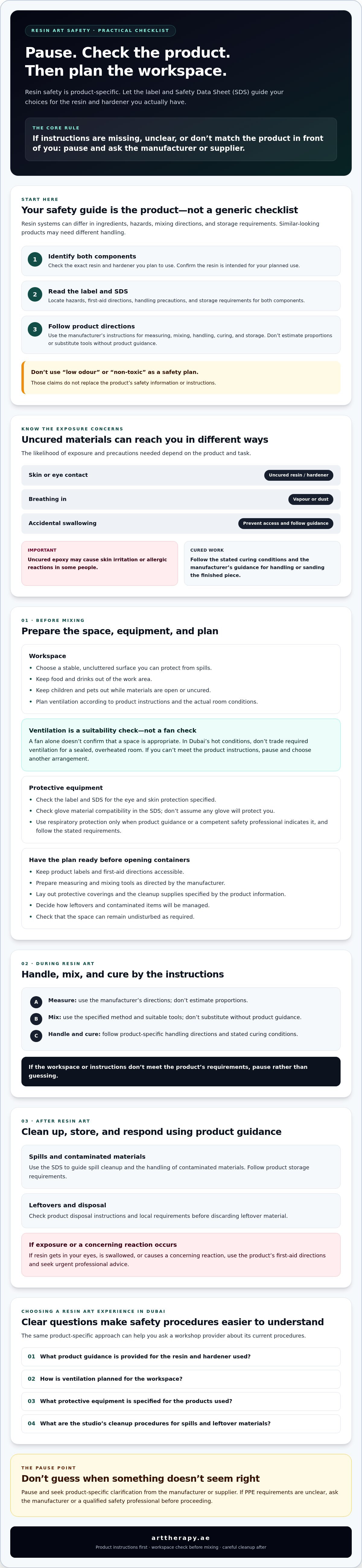
Before starting, locate the label and SDS for both components. Check the stated hazards, first-aid instructions, handling precautions, and storage requirements. Confirm that the resin is intended for your planned use, then follow the manufacturer’s mixing directions exactly. If either document is missing, unclear, or doesn’t match the product in front of you, pause and ask the manufacturer or supplier for clarification.
Which exposure concerns should beginners understand?
Uncured resin and hardener can come into contact with skin or eyes, be breathed in as vapour or dust, or be accidentally swallowed. The likelihood of exposure and the precautions needed depend on the product and task. Don’t assume that low odour or a “non-toxic” claim means you can skip its safety information. Uncured epoxy may also cause skin irritation or allergic reactions in some people.
A Safety Data Sheet is product-specific guidance that explains a material’s hazards and how to handle, store, and respond to exposure to it.
Fully cured work is different from liquid components, but don’t treat “cured” as a substitute for the manufacturer’s instructions. Follow the stated curing conditions and any guidance about handling or sanding the finished piece. If resin gets in your eyes, is swallowed, or causes a concerning reaction, use the product’s first-aid directions and seek urgent professional advice. This guide is educational, not a replacement for manufacturer instructions or medical guidance.
Before Mixing Resin: Prepare Your Workspace and Safety Checklist
Before opening the resin or hardener, set up your workspace and read the product guidance. The right preparation depends on the specific product and the room you’ll use. Don’t rely on a generic setup or assume one piece of equipment solves every concern.
How should you prepare a resin art workspace?
Choose a stable, uncluttered surface that you can protect from spills, and keep food and drinks out of the work area. Make sure children and pets can’t enter while materials are open or uncured. Plan ventilation according to the product’s instructions and the actual room conditions. A fan alone doesn’t confirm that a space is suitable. In Dubai’s hot conditions, don’t trade the ventilation the product requires for a sealed, overheated room. If you can’t meet the instructions, pause and choose another arrangement.
What protective equipment should you check?
Choose PPE according to the product label and Safety Data Sheet, not a one-size-fits-all list. Check what the manufacturer specifies for eye and skin protection. Before choosing gloves, look in the SDS for material compatibility instead of assuming any glove will protect you. Use respiratory protection only when product guidance or a competent safety professional indicates it, and follow the stated requirements for the equipment. If the instructions are unclear, ask the manufacturer or a qualified safety professional before proceeding.
What should be ready before you mix?
Gather materials and tools first so you won’t have to search for something while open containers are on the table. Use this pre-work checklist:
Confirm the resin and hardener are the intended products for your planned use, and keep their labels and first-aid directions accessible.
Measure components and prepare suitable mixing tools as directed by the manufacturer. Don’t estimate proportions or substitute tools without product guidance.
Lay out protective coverings and the cleanup supplies specified by the product information.
Decide where components will be stored and how leftover material and contaminated items will be managed after the activity.
Check that the workspace meets the product’s ventilation instructions and can remain undisturbed as required.
The U.S. Consumer Product Safety Commission explains art-material labeling under the Labeling of Hazardous Art Materials Act (LHAMA). This is U.S.-specific information, so use it as background rather than a substitute for the directions and safety documents supplied with your product.
If you’re considering a guided way to explore resin, you can learn about resin art workshops and ask the provider about its current product instructions, ventilation, protective equipment, and cleanup practices before booking.
During Resin Art: Safer Handling, Mixing, and Curing Choices
Once the workspace is ready, handle materials steadily and follow the precautions stated for the specific uncured resin and hardener. A finished piece is at a different stage, but don’t assume it can be handled, sanded, or used without checking the maker’s instructions. Gloves alone don’t make every task safe. They don’t replace suitable eye protection, ventilation, careful work, or product guidance.
How can you handle and mix resin more carefully?
Keep uncured components away from skin and eyes, avoid splashes, and handle them only as much as the task requires. Measure and combine them using the manufacturer’s directions, including any stated proportions, order of addition, and recommended tools. Don’t improvise if you’re unsure. Pause if instructions are unclear, a container is damaged, or you notice unexpected symptoms. Consult the product’s first-aid guidance and seek professional advice when needed.
These resin art safety precautions work together. A glove can become contaminated, and it won’t protect your eyes from a splash or address inhalation concerns. Keep workspace conditions aligned with the label and SDS throughout mixing, and avoid touching shared items with contaminated gloves. If anything spills, stop and follow the product-specific cleanup instructions rather than wiping it up casually.
How should you approach curing and finished pieces?
Follow the product’s stated curing conditions rather than setting the project aside just anywhere. Check any temperature, depth, batch-size, or placement limits. Resin can build heat as it cures under some conditions, so don’t exceed the manufacturer’s guidance or transfer a large batch into a different container unless the instructions allow it. Keep curing work away from people and pets as directed.
Don’t judge cure status by touch or appearance alone. Wait for the product’s stated cure conditions before handling the piece as finished, and follow any restrictions on its use. If you plan to sand, drill, or otherwise alter cured resin, remember that the work can create dust. Check the resin and tool guidance for appropriate controls before starting. “Cured” doesn’t mean every later task is dust-free or risk-free.
After Resin Art: Cleanup, Storage, and Exposure
Cleanup is part of the making process, not an afterthought. Resin art safety precautions continue until materials are secured, contaminated items are handled as directed, and the workspace is ready for ordinary use again. Follow the product’s Safety Data Sheet (SDS) at each step, since cleanup and first-aid advice can vary by formulation.
What is a sensible post-session cleanup sequence?
Follow the product’s instructions instead of reaching for a familiar household cleaner. A practical sequence is:
Secure the components. Close containers as instructed. Keep resin and hardener separate, and store them in their original labelled containers under the stated conditions. Follow any SDS guidance about keeping materials apart.
Clean tools and surfaces. Use only the method recommended for that specific product. Don’t assume water, solvents, or a general-purpose cleaner is suitable.
Set aside contaminated items. Gloves, cloths, mixing tools, and protective coverings that have contacted uncured material may need specific handling. Don’t casually reuse them or put them with ordinary laundry or rubbish without checking the product guidance.
Manage leftover material and waste. Never pour resin or hardener into a drain. Check the manufacturer’s disposal instructions and verify current local requirements before deciding how to dispose of leftovers or contaminated waste.
In Dubai, treat Dubai Municipality information as a place to verify current waste guidance, not as confirmation of a resin-specific disposal rule. If the manufacturer’s instructions don’t clearly address a particular waste item, ask the supplier or relevant local authority before disposing of it.
What should you do after skin, eye, or inhalation exposure?
Respond promptly, but don’t rely on a universal home remedy. Follow the product’s first-aid instructions immediately, including directions for skin or eye contact or inhalation. If symptoms are severe or you’re concerned about an urgent exposure, contact local emergency services or a medical professional. Keep the container label and SDS nearby so you can share the product details when asking for help.
A clear cleanup plan can make a resin session feel more considered from start to finish. If you’d like to explore the medium in a guided setting, you can book a resin art workshop in Dubai. Before booking, ask the provider about its current product instructions, exposure response, and cleanup procedures.
Choosing a Safer Resin Art Experience in Dubai
A guided class gives beginners a chance to learn the process and ask questions as they arise. Still, the word “workshop” alone doesn’t tell you what products or safety arrangements are used. Before booking, look for clear, product-specific answers. The same resin art safety precautions that guide a home project can help you assess whether a studio’s approach feels right for you.
What should you ask before booking a resin art class?
Ask how participants are introduced to the resin and its instructions before handling it. Look for a clear explanation of the product’s label and Safety Data Sheet, not a broad assurance that all resin is the same. It’s also reasonable to ask:
What protective equipment is provided, and what should participants bring?
How is workspace ventilation planned for the specific product and room?
What steps are in place for spills, cleanup, and handling leftover materials?
Are there any parts of the activity that participants should avoid if they have particular sensitivities or concerns?
These are questions, not assumptions about any particular studio. A careful provider should be able to explain its current procedures and help you understand what to expect. If an answer is unclear, follow up before you book.
Is a guided workshop a good choice for a beginner?
It can be. Instruction may help you understand the activity’s sequence and how the product’s directions apply in practice, while giving you a chance to ask for clarification. A workshop doesn’t remove the need for product-specific precautions, so make sure you’re comfortable with the answers about handling, ventilation, protective equipment, and cleanup.
If you have a relevant sensitivity, health concern, or uncertainty about taking part, share it with the provider before booking. Ask whether the activity and its current arrangements are appropriate for you. For broader ideas about choosing a creative setting, see Art Workshops in Dubai: A 2026 Guide to Finding Your Creative Sanctuary.
Art Therapy offers resin art workshops in Dubai. If you’re considering joining one, explore the workshop and ask about its current product guidance and safety procedures before making a decision. Getting clear answers beforehand can help you focus more comfortably on the creative process.
Make Your Next Resin Art Session a More Informed One
Safer resin art begins with the specific product, not assumptions. Check the label and Safety Data Sheet before you start, prepare a workspace that meets the product’s ventilation guidance, and follow its instructions through mixing, curing, and cleanup. If a direction is unclear or a concern arises, pause and seek product-specific or professional advice rather than guessing.
These resin art safety precautions can help you approach the creative process with greater care, whether you’re working at home or considering a guided class. Before booking a workshop, ask about the product guidance, protective equipment, ventilation, and cleanup procedures currently in place. Clear answers help you decide what feels appropriate for you.
Art Therapy offers resin art workshops in Dubai at its studio on Sheikh Zayed Road. To explore the medium in a guided setting, explore Art Therapy’s resin art workshop in Dubai and ask any safety questions that will help you feel prepared. Take your time, trust your questions, and let learning be part of the making.
Frequently Asked Questions
Is resin art safe for beginners?
Beginners can explore resin art more carefully when they understand and follow the instructions for the specific product. Start by reading its label and Safety Data Sheet (SDS), then prepare a workspace that meets the stated handling and ventilation guidance. Don’t begin if instructions are missing or unclear. If you’d prefer guided learning, ask a Dubai workshop provider what safety information and procedures apply before booking.
Do I need a mask when working with resin?
Not every resin task calls for the same respiratory protection. Check the product label and SDS to see what they specify for your material and activity, and ask the manufacturer or a competent safety professional if the instructions aren’t clear. If respiratory equipment is indicated, use the type specified and follow its instructions. A mask doesn’t replace required ventilation or other precautions, and a fan alone doesn’t confirm that a room is suitable.
Are nitrile gloves suitable for all resin?
No glove material should be assumed suitable for every resin. Check the Safety Data Sheet and manufacturer’s guidance for glove compatibility with the specific resin and hardener. Nitrile gloves are commonly recommended for some resin work, but that doesn’t make them universally protective for every formulation or task. Use gloves as directed, replace contaminated or damaged ones according to product guidance, and remember that gloves don’t protect your eyes or address inhalation risks.
Can I work with resin indoors in Dubai?
Indoor work may be appropriate only if the space meets the product’s ventilation and handling instructions. Assess the actual room, not just whether a window or fan is present. In Dubai’s heat, don’t rely on a sealed, hot room if the product requires ventilation. If you can’t meet the stated conditions, pause and choose a more suitable arrangement. Keep children and pets away from the active workspace and curing work as directed.
What should I do if resin gets on my skin or in my eyes?
Follow the product’s first-aid instructions immediately, since the appropriate response can depend on the resin or hardener involved. Don’t rely on a general online remedy or delay action while searching for advice. If symptoms are severe or you’re concerned about an urgent exposure, contact local emergency services or a medical professional. Keep the container label and SDS available so you can share the exact product information with them.
Can I pour leftover resin down the sink?
No. Don’t pour leftover resin or hardener into a sink or other drain. Check the manufacturer’s disposal directions and verify current local waste guidance before deciding how to manage leftovers, contaminated tools, gloves, or cloths. In Dubai, treat Dubai Municipality guidance as a point to check, not as confirmation of a resin-specific disposal rule. If the directions don’t cover your situation, ask the supplier or relevant local authority before disposal.
Is cured resin safe to touch?
Fully cured resin is generally considered different from uncured liquid components, but don’t use appearance or a dry feel alone to decide that curing is complete. Follow the manufacturer’s stated curing conditions and guidance for handling the finished piece. If you plan to sand, drill, or alter it, check the product and tool instructions first, since that work may create dust. Seek product-specific advice if cure status or safe handling is uncertain.


Comments