How to Start Painting as a Hobby: A Gentle Beginner’s Guide
Your first painting doesn’t need to be impressive to be worthwhile. If you’re wondering how to start painting as a hobby, it’s natural to feel unsure about which paints to choose, what supplies you need, or whether a lack of experience will make the process frustrating. You don’t need a perfect setup or natural talent to begin. A few suitable materials and room to experiment are enough.
This guide will help you choose a medium, gather a simple set of supplies, and plan a first painting around an approachable subject. You’ll also find practical ways to make painting a relaxed, sustainable habit, with the focus on curiosity and enjoyment rather than judging the finished result.
You can begin at home, one small session at a time, or explore painting with guidance. If you’re in Dubai, Art Therapy offers acrylic and oil painting workshops, along with workshops in other creative techniques. Whichever way you start, treat your first brushstrokes as a beginning, not a test.
Table of Contents
How to start painting as a hobby when you have no experience
You can begin painting with curiosity, not prior training, a portfolio, or a settled style. A hobby practice is simply informal, self-paced making: time to explore colour and shape without treating each canvas as a test. If you’re learning how to start painting as a hobby, give yourself permission to begin before you feel ready.
Your first paintings are experiments. One may feel awkward but still teach you something useful: perhaps you enjoyed mixing colours, found small details absorbing, or preferred loose, expressive marks. Painting includes many media and approaches. A broad introduction to what is painting can help you see how many ways there are to make an image. You don’t need to choose a signature style before you try.
Do you need natural talent to learn to paint?
No. Painting involves skills you can practise, including observing proportions, noticing how colours relate, and deciding where to place a mark. Before aiming for realism, look closely at a subject’s shapes, edges, and areas of light and shadow. In a first study of a cup, for example, the rim might be uneven or the shadow may fall in the wrong place. Treat that as a prompt to observe more closely next time, not as proof that you can’t paint.
What should your first painting goal be?
Choose one small aim, such as mixing a few colour swatches or painting a simple study of a piece of fruit. A modest subject gives you space to notice how your materials behave without the pressure of making a masterpiece. Set aside a comfortable amount of time and stop while the activity still feels manageable. Afterwards, note one discovery to carry into your next attempt, such as how two colours mix or which brush movement felt natural.
There’s no required pace. Choose a medium that interests you, gather a few suitable supplies, try a first exercise, then return to painting when it feels right. Repeating a small experiment helps you learn by doing without needing to master everything at once. You may notice something new each time and gradually find the subjects and materials that make you want to keep exploring.
Choose beginner painting materials without overbuying
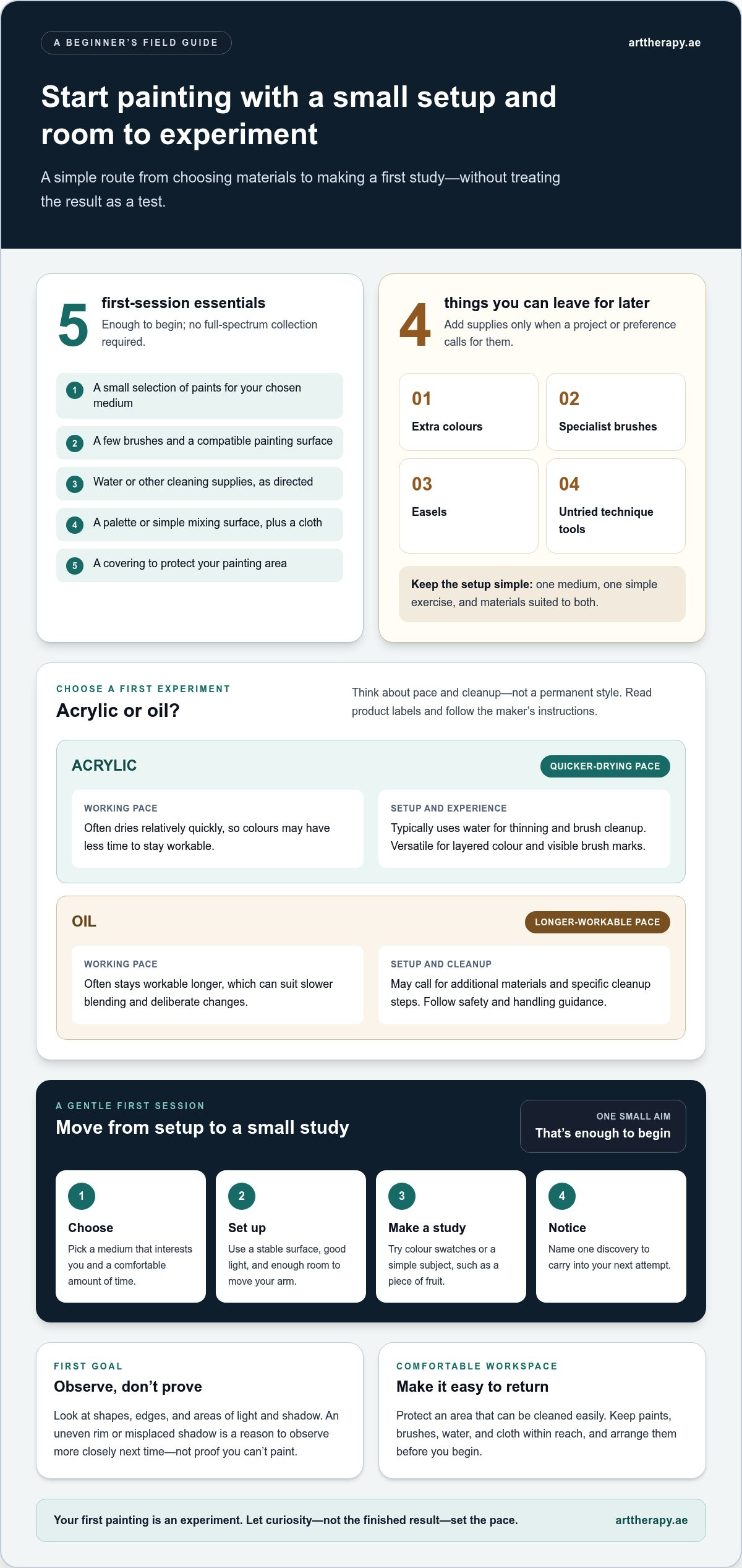
A small, functional setup is enough to begin. You don’t need a full spectrum of colours or a tool for every technique. A limited selection lets you learn how paint behaves before deciding what else would make the process easier. If you’re exploring how to start painting as a hobby, choose materials for one medium and one simple exercise instead of shopping for every possibility.
What basic supplies do you need for a first painting?
Start with a few paint colours, brushes in different sizes, and a surface made for your chosen medium. For acrylic practice, use a palette for mixing, water for rinsing brushes, and a cloth for catching drips. A reusable cover or other workspace protection can also help you paint without worrying about spills. Artsy’s guide to how to start painting offers another useful perspective on beginning without overbuying.
Materials vary by medium, so don’t assume that every paint, surface, or cleanup method works the same way. Read the labels and instructions for your specific products, including any directions about ventilation, handling, and cleanup. This matters especially when you move beyond water-based paints, since recommended materials and care can differ.
Essentials for a first session:
A small selection of paints suited to your chosen medium
A few brushes and a compatible painting surface
Water or other cleaning supplies as directed for those materials
A palette or simple mixing surface, plus a cloth
A covering to protect the area where you’ll paint
Optional for now: extra colours, specialist brushes, easels, and tools for techniques you haven’t tried. Add them later if a particular project or preference gives you a reason.
How do you set up a comfortable painting space?
Choose a stable surface with good light and enough room to move your arm freely. Protect an area that can be cleaned easily, then put your paints, brushes, water, and cloth within reach. Arranging everything before you begin can reduce interruptions and help the session feel more settled. Keep the setup simple enough that you’ll want to return to it.
If you’d rather explore materials with guidance, Art Therapy’s acrylic painting workshops in Dubai offer a welcoming way to try the medium. At home or in a class, the aim is the same: make room to experiment and let your needs become clearer as you paint.
Acrylic, oil, or water-based painting: which should a beginner try?
There isn’t one medium that suits every beginner. Think about the pace you enjoy, the marks you’d like to make, and how much setup and cleanup feel comfortable. Use this comparison to choose a first experiment, not to lock yourself into a permanent style. For another beginner-focused overview of media and first steps, see this seven-step guide to painting for beginners.
These are general tendencies, not fixed rules. Formulas and working properties vary, so read the label before you begin. If you’re weighing how to start painting as a hobby, try a small study before investing in more supplies or deciding you’re “good” or “bad” at a medium. First, find out whether you enjoy working with it.
Is acrylic paint a good first medium?
Acrylic can be a comfortable option if you want to explore colour and brushwork without a complex setup. Its water-based nature generally makes brush cleanup straightforward, though product directions still matter. Drying pace affects how long paint remains workable, so check the label and plan a small colour study: blend two colours, paint one over another, and notice how different brush marks feel.
When might oil painting or another medium suit you?
Oil may appeal if you like taking your time, returning to areas, and blending colours gradually. Its materials and cleanup need careful attention to the maker’s safety instructions. Art Therapy offers oil painting workshops in Dubai, where you can explore the medium with guidance. Watercolour is another possibility if you’re drawn to transparent washes. Fluid art offers a more spontaneous way to explore colour and movement, and Art Therapy also runs fluid art workshops.
Follow these steps to make your first painting and keep practising
A first painting can be a small study, not a finished scene. Choose a familiar subject, such as a piece of fruit, a houseplant, a simple landscape, or a few shapes arranged on a table. If you’re learning how to start painting as a hobby, make the first session about noticing and trying, not getting every detail right.
What is an easy first painting exercise?
Try painting one familiar object with a limited palette. Before using paint, make a quick thumbnail sketch or arrange a few loose shapes on your surface to decide where the subject might sit. Then follow this simple sequence:
Choose: Select one object or a simple reference you can look at while painting.
Prepare: Set out your materials and choose a few colours that suit the subject.
Observe: Notice the largest shapes, colour areas, and places where light meets shadow.
Paint: Block in the broad shapes first. Add smaller marks or details once the main areas feel settled.
Reflect: Notice what you enjoyed or found challenging, then choose one thing to explore next time.
You can set the object aside and make an abstract colour study instead. Try placing a few large areas of colour, layering marks, or repeating a shape. If you’d like to learn alongside others, painting classes in Dubai are one way to set aside dedicated time to explore a medium.
How can you make painting a regular hobby?
Choose a recurring cue that fits your life, such as painting after breakfast on a free morning or setting aside time when your workspace is already clear. There’s no universal schedule to follow. Keep your paintings together, including quick studies, so you can notice how your colour choices, brush marks, and confidence change over time. Treat each page as a record of exploration, not a scorecard.
If texture catches your eye, try palette knife painting as another technique to explore. If you’d like guidance, join a painting workshop in Dubai. Keep your practice flexible: some sessions can be planned, while others can begin with a colour or shape that draws your attention.
Keep your painting hobby enjoyable with guidance, reflection, and room to grow
A painting hobby can move between quiet solo practice and occasional guided sessions. You might enjoy experimenting at home, then take a class when you want to understand a tool or technique more clearly. Neither approach is a requirement or a measure of commitment. Find the balance that helps you stay curious and return to painting comfortably.
When can a painting class help a beginner?
A demonstration can make unfamiliar materials easier to approach. Seeing how a brush, palette knife, or layer of paint is used gives you a practical starting point, while an instructor can guide you as you explore. A class also sets aside time to focus without requiring you to plan every step yourself.
Guidance is optional, not a prerequisite for becoming a painter. Art Therapy offers acrylic and oil painting workshops in Dubai. These guided sessions can sit alongside independent practice, giving you techniques and ideas to try in your own work.
How can you reflect without judging your work?
After a session, pause before deciding whether you like the finished piece. Instead, ask yourself: What part did I enjoy? What surprised me? What might I try next time? Jot down a few words, such as “liked mixing greens” or “try broader brushstrokes.” These observations make the next session easier to begin without turning practice into a performance review.
An unfinished painting can still hold useful discoveries. An unexpected mark may lead you towards a different texture; a colour that didn’t turn out as planned can show you what to adjust or explore. Leave the work as it is, or return to it later with fresh eyes. Progress often appears gradually, in the choices you make and the details you start to notice.
If you’re deciding how to start painting as a hobby, choose one gentle next step: select a medium, prepare a small experiment, or try a guided class. You don’t need to plan your whole creative future today. If learning in a welcoming studio setting feels right, explore Art Therapy’s creative workshops in Dubai.
Let your next brushstroke be a beginning
Learning how to start painting as a hobby doesn’t require a perfect first picture or a cupboard full of supplies. A small, workable setup gives you room to try, and choosing a medium by its pace and feel helps you discover what you enjoy. Begin with one manageable experiment, then notice what you’d like to explore next.
Keep your practice flexible. A few quiet minutes with paint can build familiarity over time, and a guided class can offer structure or a fresh perspective when you want it. Your paintings don’t need to follow a schedule or meet anyone else’s standards. Let curiosity, rather than comparison, shape your next step.
To explore a medium in a supportive setting, book a creative workshop with Art Therapy in Dubai. Or set out a few colours and begin where you are. Every mark is part of the learning, and your creative path can unfold at its own pace.
Frequently Asked Questions
Can anyone learn to paint as a hobby?
Yes. Painting is a skill anyone can explore through observation, experimentation, and practice, and formal training isn’t required to begin. If you’re wondering how to start painting as a hobby, choose a simple subject or colour study and let the first attempt teach you how the materials and marks feel. Your result may look different from what you pictured. That’s part of learning, and curiosity can be a rewarding goal in itself.
What is the easiest paint for a beginner to use?
Acrylic is one approachable option for a first painting because it works well for simple studies and can generally be cleaned up with water when you follow the product directions. It isn’t the only suitable choice. You may prefer the slower pace of oil or the qualities of another medium. Consider your workspace, preferred working speed, and comfort with the materials, then try a small study before deciding what suits you.
What supplies do I need to start painting at home?
Begin with a small amount of paint, a few suitable brushes, a compatible painting surface, and a palette for mixing. Water and a cloth can help with acrylic practice, while a covering can protect your work surface. The right cleanup supplies depend on the medium, so read product instructions before using anything. Add tools gradually as you learn which colours and brush shapes you enjoy, rather than buying a large kit at the outset.
How do I choose between acrylic and oil painting?
Choose by considering how quickly you like to work, what setup feels comfortable, and which effects you want to explore. Acrylic and oil behave differently, so neither is automatically the best choice for every beginner. A small study can help you notice which medium feels more enjoyable. Follow the maker’s directions for use, workspace, and cleanup, particularly with oil materials, since handling and care instructions can vary between products.
Do I need to draw before I start painting?
No, drawing isn’t a requirement before you paint. A loose sketch can help you plan a subject, but you can also begin by arranging large shapes and colours, tracing a simple outline, or making an abstract study. Choose the starting point that feels most welcoming. Let the main areas take shape first, then add details only if they help express what you want the painting to show.
How often should I practise painting as a hobby?
Choose a rhythm that fits your responsibilities and feels realistic to repeat. There’s no single schedule that suits everyone, and a short session can be easier to begin than waiting for a large block of free time. Keep a brief note of what you tried and enjoyed after each session. Over time, adjust your routine as your interest, available time, and preferred way of painting evolve.
Can a beginner join a painting workshop in Dubai?
Yes. A guided workshop is one way to explore painting with structure and instruction, though it isn’t necessary to start. Art Therapy offers acrylic and oil painting workshops in Dubai, where beginners can explore a medium in a creative setting. A demonstration can make tools and techniques feel more familiar, and you can take ideas from the session into your own practice. Independent painting is also a perfectly valid way to begin.


Comments