
How to Be More Creative in 2026: Simple Tips
Updated: 3 days ago
What if becoming more creative didn’t mean having natural talent, more free time, or a perfect idea? If you’re wondering how to be more creative in 2026, start with something small: a curious experiment, a few minutes of observation, or the willingness to make something imperfect. Generative AI can help produce options, but your perspective and choices shape what you do with them. Creativity isn’t a test to pass. It’s a way to explore what catches your attention.
It’s easy to feel blocked when you’re unsure where to start or think you need professional skills to make art. This guide offers practical ways to spark ideas and build a creative habit without pressuring yourself to produce a masterpiece. Try noticing details around you, testing one small change, and reflecting on what you enjoyed. If you’d like a dedicated place to experiment, Art Therapy’s guided workshops in Dubai offer hands-on ways to explore paint, resin, alcohol ink, and other art forms.
Table of Contents
What Does It Mean to Be More Creative in 2026?
You don’t need to call yourself an artist to live creatively. Creativity can mean exploring a possibility, combining familiar ideas in a new way, or finding a form to express what interests you. If you’re asking how to be more creative in 2026, start by widening the definition: it’s not a personality test, a job title, or a demand to make something impressive. It’s the practice of paying attention and choosing how to respond.
Everyday creativity is the act of noticing, combining, or expressing ideas in ways that bring something new to an ordinary activity. The result might be a useful solution, a fresh perspective, or simply an experiment you enjoyed trying.
Digital tools can help generate options, but people still bring their own memories, preferences, and judgment to what they make. A tool might suggest a recipe variation; you decide which flavours appeal to you and how to adapt it. For a wider overview of the concept, Creativity spans many forms of thinking and making, not just the visual arts.
Creativity is a practice, not a personality test
Curiosity is a creative act. So is observing what catches your eye, asking “what if?”, and trying a small change to see what happens. You might test a new recipe with ingredients already in your kitchen, rearrange a reading corner, or take a different route through a familiar neighbourhood. None of these requires drawing skills or a finished artwork. The value is in noticing, choosing, and experimenting.
Creative practice can be quiet and personal, too. Collect interesting colour combinations during your day, write down a question you keep returning to, or combine two ideas that seem unrelated. Some attempts will lead nowhere, and that’s part of exploring. You’re gathering clues about what engages you, rather than proving that you’re talented.
Why make room for creativity in 2026?
Busy routines often reward tasks with a clear, practical outcome. Making room for an activity simply because it interests you can feel unfamiliar, but it gives personal interests a place in everyday life. A creative habit can give you space to express yourself and learn: you might discover a material you enjoy, a subject you want to explore, or a new way to approach a familiar challenge.
There’s no need to turn that space into another performance goal. Creativity doesn’t guarantee a particular emotional or health outcome, and it doesn’t have to produce something useful. Think of it as protected time to follow a question or see what happens when you try. Whether you experiment in your kitchen, on paper, or with paint, the practice belongs to you. Begin with what feels inviting, and let the finished result remain a possibility rather than a requirement.
How Creativity Develops Through Curiosity and Experimentation
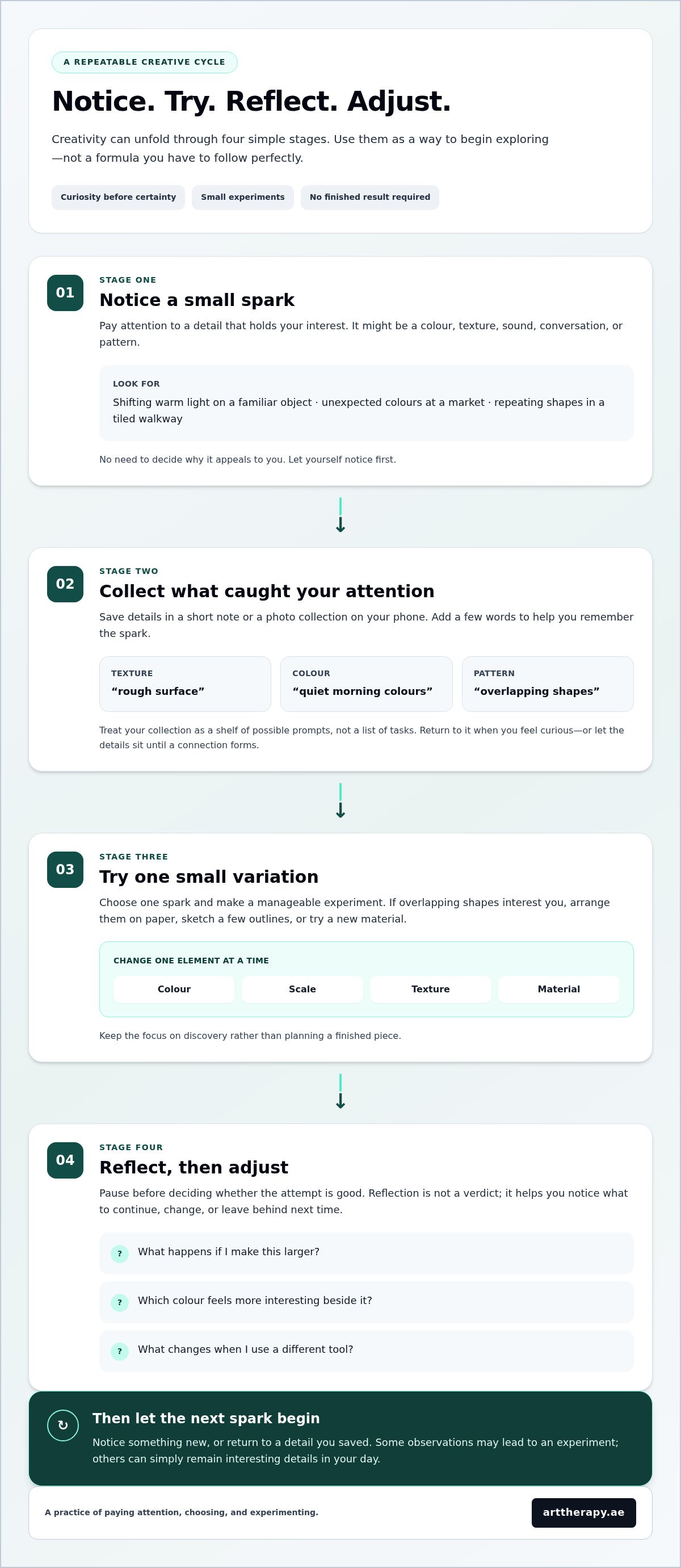
Ideas often begin with details that are easy to overlook: a shadow shifting across a wall, a phrase from a conversation, or the repeating shapes in a tiled walkway. When you pause to notice these small sparks, you give your mind something specific to work with. Creativity can then unfold through a simple cycle: notice something, try a response, reflect on what happened, and adjust your next attempt.
Creativity grows through noticing, trying, reflecting, and adjusting, a repeatable cycle that makes room for discovery without guaranteeing a particular result. If you’re exploring how to be more creative in 2026, use this as a way to begin, not a formula you need to follow perfectly. Some observations may lead to an experiment; others can simply remain interesting details in your day.
Begin with observation and collect small sparks
For a few days, pay attention to colours, textures, sounds, conversations, or patterns that hold your interest. You might notice how warm light changes the look of a familiar object, how a market stall combines produce in unexpected colours, or how the same phrase feels different in another context. You don’t have to decide why something appeals to you. Let yourself notice first.
Save these details in a short note or a photo collection on your phone. Add a few words to help you remember what caught your attention, such as “rough surface,” “quiet morning colours,” or “overlapping shapes.” Treat the collection as a shelf of possible prompts, not a list of tasks. Return to it when you feel curious, or let the details sit together until a connection begins to form.
Let experiments lead before judging the result
Choose one spark and make a small variation around it. If you’re interested in overlapping shapes, try arranging them on paper, sketching a few outlines, or using a material you haven’t worked with before. Change one element at a time, such as colour, scale, texture, or material. This keeps the experiment manageable and helps you notice what you enjoy, without requiring a plan for a finished piece.
As you work, ask questions that keep your attention on the process: What happens if I make this larger? Which colour feels more interesting beside it? What changes when I use a different tool? Pause before deciding whether the attempt is good. Reflection is not a verdict. It’s a way to notice what you might continue, change, or leave behind next time.
A guided session can add structure, with instruction and materials in one place. At Art Therapy’s studio on Sheikh Zayed Road in Dubai, workshops in fluid art, alcohol ink, and 3D texture art offer different ways to explore how materials behave. If you’d like guidance while making, explore guided art workshops in Dubai as a way to set aside time for hands-on discovery.
What Gets in the Way of Creativity, and How to Respond
A blank page can make a small idea feel like a test. You might wonder whether you’re talented enough, whether the result will look right, or whether you’ll waste time and materials. These doubts don’t mean you lack creativity. Making something is a way to explore, not proof that you already know how to do it.
Creativity doesn’t require innate artistic talent. It can grow through practice, attention, and a willingness to try. A rough sketch, an unfinished draft, or a colour combination that doesn’t work still gives you information. The aim isn’t to make every attempt successful. It’s to make starting feel manageable enough that you can learn from what happens.
How can you start when you feel creatively blocked?
Waiting for a complete idea can feel reassuring, but it can also keep you waiting. Inspiration may bring energy and direction; beginning with a small prompt gives you something concrete to respond to. Try “draw a shape I noticed today,” “write three lines about a familiar place,” or “combine two colours I don’t usually use.” You can stop after a first attempt. It doesn’t need to become a larger project.
If the project feels too big, shrink the next step until it fits into today. Instead of planning an entire painting, choose a subject or make a few marks on paper. If you get stuck, change one condition: switch from pencil to paint, move to a different spot, or choose a simpler prompt. A change of approach can make the task feel new without asking you to abandon it.
How do you loosen perfectionism and comparison?
Give experimenting and finishing separate moments. During an experiment, your only job is to try a possibility. Later, decide whether you want to develop, revise, or set it aside. Keeping early attempts private can also soften the pressure to explain or defend them. You’re allowed to make something just for the experience of making it.
Comparison can make another person’s finished work seem like a standard you must meet. Try looking at it differently: what colour, texture, or idea draws your attention? Let that become a prompt for your own exploration, rather than a measure of your ability. Their work belongs to their path; yours can begin with one small choice.
To practise how to be more creative in 2026, lower the stakes before you begin. Use a scrap page, a rough draft, or a limited amount of material for a first try. In a guided art workshop, instruction and materials give you a practical starting point for hands-on exploration. Whether you begin alone or with guidance, permission to experiment is more useful than waiting for certainty. Start small, notice what interests you, and let the next step emerge from there.
A Practical Weekly Routine to Help You Be More Creative
A creative habit doesn’t need a dedicated room, expensive supplies, or a free afternoon. Give it a small, realistic place in your week instead. A short session with paper, a pen, or another material already at home can help you practise starting without making creativity another demanding task. If your schedule shifts, move the session or make it shorter. Returning matters more than following a perfect timetable.
Build a repeatable creative session that fits your day
Choose a time that feels possible, then set out a prompt and a few simple materials beforehand. Keep the session open-ended: you’re making space to explore, not committing to finish a piece. At the end, write one brief note about what held your attention. That reflection gives you a starting point for next time, whatever the result looks like.
Use this flexible sequence once a week, or adapt it to the time and energy you have:
Notice: Choose one detail from your week, such as a colour in a shop window, a textured surface, or an interesting phrase.
Choose a prompt: Turn that detail into a small invitation, such as “make something using circles” or “describe a familiar place through colour.”
Make: Work with what’s already available. Try a pen and scrap paper, arrange objects on a table, or use leftover paint. Keep the first attempt loose.
Reflect: Note what felt absorbing, surprising, or worth changing. You don’t need to decide whether the result is finished.
Repeat: Return to the same idea with one adjustment, or pick a new prompt if your interest has moved on.
Make the steps smaller on a busy day. You could spend a few moments collecting a prompt and return to making when you have more space. If you have more energy, stay with the idea longer or explore another version. This isn’t a test of consistency; it’s a framework you can reshape around real life.
Try prompts that make starting easier
Prompts offer a first step when choosing a subject feels difficult. Begin with one colour, texture, memory, everyday object, or mood. For example, explore the feeling of a quiet morning using a few lines, a small arrangement of household objects, or marks on paper. Let the prompt guide you without dictating what the result should be.
You can revisit one prompt in different materials to see how the experience changes. A rough texture might become a pattern drawn with a pencil, layered paint, or raised marks. If you’re curious about working with texture, palette knife painting in Dubai offers another way to explore how tool and surface shape a creative experiment.
If making at home is difficult to fit into your week, explore guided art workshops for dedicated, hands-on creative time in Dubai.
Explore Your Creativity Through a Guided Art Workshop in Dubai
Sometimes the hardest part of making time for creativity is protecting that time from the rest of the day. A guided art workshop offers a practical way to step away from routine and focus on trying something with your hands. You don’t need to arrive with a finished idea or previous experience. Begin with curiosity and see where the process takes you.
Art Therapy is a creative art studio on Sheikh Zayed Road in Dubai, with a welcoming setting for beginners and experienced artists. Workshops include instruction and materials, so you can focus on exploring the process rather than planning every detail in advance. The finished piece may surprise you, but there’s no single outcome you need to aim for. Your choices, discoveries, and enjoyment of making are part of the experience.
Choose an art form that invites you to experiment
Consider what you’re curious to feel, see, or try. Resin art and fluid art invite exploration of movement and flow; alcohol ink offers another way to observe how colour and material interact. Painting lets you play with colour and mark-making, while 3D texture art brings surface and dimension into the process. These are different starting points, not fixed paths to a particular result.
If you’re unsure which direction feels right, choose the process that catches your attention. Are you curious about layering, spreading colour, working with texture, or watching materials move? There’s no need to decide which art form suits you in general. Simply notice what you’d like to explore now. Trying one approach can also help you discover what you might want to experiment with next.
Make space for creative exploration in Dubai
A welcoming studio can make it easier to give an activity your full attention, especially if your usual routine leaves little room for open-ended making. Having instruction and materials in one place offers structure while leaving space for personal choices. You can follow guidance, explore at your own pace, and focus on what interests you without treating the result as a measure of success.
As you consider how to be more creative in 2026, a workshop is one practical way to set aside time for hands-on exploration. It’s also an opportunity to try an art form with guidance, whether you’re taking a first step or returning to making after a break. Explore the different art workshops in Dubai and choose an experience that feels inviting to you.
If you’d like to make dedicated time for guided creative exploration, explore creative workshops at Art Therapy.
Give Your Next Idea Room to Grow
You don’t have to wait for a clear plan before you begin. Choose one small thing that has caught your attention, then give yourself permission to follow it without deciding what it should become. A few marks, a written note, or a first experiment can be enough to open a door. The next step may feel clearer once you’ve started.
Learning how to be more creative in 2026 can be less about adding another goal and more about making room for curiosity in the life you already have. Some days, that might mean exploring an idea at home. Other times, a guided setting can help you set aside distractions and enjoy making alongside instruction.
Ready to try a hands-on creative experience in Dubai? Explore creative workshops at Art Therapy.
Frequently Asked Questions
Can creativity help with problem-solving?
Yes, creative thinking can help you consider more than one way to approach a problem. If a familiar dinner plan feels repetitive, for example, list a few possible changes before deciding what’s practical. Then test one small option and notice what you learn. This doesn’t mean every idea will work; it gives you alternatives to assess instead of relying on the first solution that comes to mind.
Does changing your surroundings help you feel more creative?
A change of surroundings can offer fresh details to notice, though it won’t guarantee inspiration. Try moving from your usual desk to a different seat, sitting near a window, or taking a short walk and paying attention to shapes and sounds. If you’re wondering how to be more creative in 2026, treat the change as an experiment: see whether a new setting helps you focus or sparks a thought.
Can you be creative without buying art supplies?
Absolutely. You can make a photo series using your phone, write a short scene in your notes app, invent a new way to arrange objects you already own, or create a rhythm by tapping a table. Set yourself a simple limit, such as using only what’s in one room. A small constraint can make choosing easier, and you can explore without turning the activity into a shopping list.
How can you share creative work without feeling exposed?
Share a small part of the work rather than presenting the whole thing. You could show one detail, describe what you were testing, or ask a trusted person a specific question, such as which of two colours feels clearer. You can also keep early attempts private. Sharing is optional, and you’re allowed to choose the timing, audience, and amount that feels comfortable.
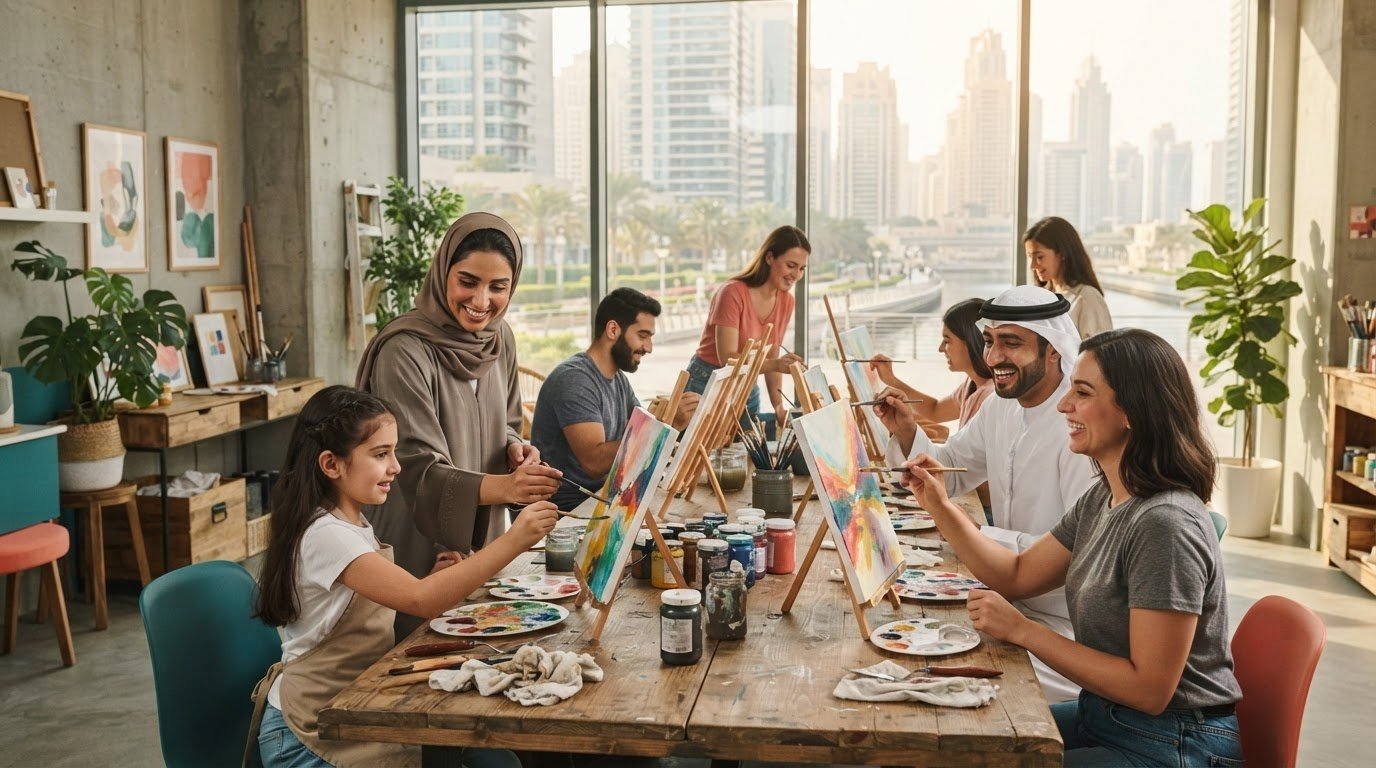
Can making art with other people give you new ideas?
What should you do with a creative idea you do not want to finish?
You can leave it unfinished. Write down what interested you and where you stopped, or take a photo so you can remember the idea without keeping every material set out. Later, you might return to it, change its direction, or decide it has served its purpose. An unfinished piece isn’t wasted effort; it can be a record of something you explored and learned.

Comments